 EN

Why the First Supplier Choice Shapes Everything That Follows
A cosmetic startup lives or dies on a few early decisions, and packaging is one of the quiet ones. The bottle is not just a container. It is the thing a customer holds, opens, squeezes, and judges. It is also the piece of the product that carries the regulatory burden of compatibility, leakage resistance, and labeling. Pick the wrong bottle supplier and the problems show up months later, when a run of bottles arrives with inconsistent neck finishes and the filling line starts rejecting units. At that point switching is expensive and the launch calendar is already blown. That is why vetting matters before the first purchase order, not after.
The Qualification Questions That Reveal Real Capability
Most suppliers can talk a good game. The way to separate them is to ask questions that require specific answers. A few worth putting on the table:
-
What resin grades are used, and can documentation be provided for food contact or cosmetic contact compliance?
-
What is the mold ownership arrangement if a custom shape is developed?
-
What are the actual production tolerances on neck diameter and bottle height?
-
How is color matching handled, and what is the acceptable variance between batches?
-
What happens when a batch fails incoming inspection at the filler?
Suppliers who answer these without hesitation are usually the ones who have been through real audits. Suppliers who deflect or give vague answers are telling you something important. The goal is not to catch anyone out. It is to find out whether the operation has the systems to handle problems when they occur, because problems always occur.
Reading a Factory Beyond the Brochure
A factory tour is useful, but only if it is read correctly. The brochure photos show the cleanest corner of the plant. The reality is in the details. Look at how material is stored. Resin that sits in open bags near a loading dock picks up moisture, and moisture in the resin causes surface defects and weak walls. Look at the inspection stations. A plant with a proper incoming inspection area and documented logs is a plant that catches problems early. Look at the mold maintenance area. Molds that are tracked and maintained on a schedule produce consistent parts. Molds that are run until they fail produce drift. A packaging buyer once visited a plant in the Pearl River Delta that looked impressive until the mold storage room was opened. Molds were stacked on the floor without protection, and several had visible rust on the cavity surfaces. That single room told more about the operation than the entire showroom.
The Numbers That Matter in Bottle Specifications
Specifications are where a lot of supplier relationships get tested. Vague specs lead to disputes. Tight, measurable specs lead to clear accountability. The table below lists common parameters and typical tolerance ranges worth insisting on. Values vary by bottle size, material, and process, so they should be confirmed against the specific application.
| Parameter | Typical Tolerance Range | Why It Matters |
|---|---|---|
| Neck finish diameter | plus or minus 0.10 to 0.20 mm | Determines cap fit and leakage |
| Bottle height | plus or minus 0.30 to 0.50 mm | Affects filling line and labeling |
| Wall thickness | plus or minus 0.05 to 0.15 mm | Affects strength and squeeze feel |
| Color consistency | Delta E under 1.5 | Affects shelf appearance |
| Drop test pass height | 1.2 to 1.5 m depending on size | Indicates impact resistance |
These are not arbitrary. They come from common packaging quality references and from filler requirements. The point is that a supplier willing to commit to measurable tolerances is a supplier that understands the consequences of drift. A supplier that resists putting numbers on paper is a supplier that will argue later.
Compatibility, Migration, and the Compliance Side
Cosmetic packaging sits in contact with formulations that contain oils, surfactants, fragrances, and sometimes alcohol. Not every plastic is compatible with every formula. PET is widely used but can be affected by certain solvents. HDPE is more chemically resistant but less clear. PP offers good resistance and clarity tradeoffs. The supplier should be able to explain which resin suits which formulation and should be willing to run compatibility testing. Migration testing matters too, since some formulation ingredients can leach compounds from the plastic. Regulations vary by market, and the EU in particular has tightened requirements on packaging materials that contact cosmetic products. A supplier who can speak to these requirements, and provide documentation, is worth more than one quoting a lower unit price.
Lead Times, Minimums, and the Reality of Scaling
Every startup wants low minimum order quantities and fast lead times. The honest truth is that these two desires often conflict. Small runs mean higher per unit costs because setup time is spread over fewer units. Fast lead times mean either paying for air freight or holding inventory, neither of which is cheap. A supplier that promises both low minimums and short lead times without any tradeoff is probably not being straight. The better conversation is about what happens at each stage of growth. What is the minimum for a first trial run? What is the minimum for a production order once the design is locked? How long does a mold take to cut? How much notice is needed for a repeat order? A supplier who can map this out clearly is a supplier who has helped other brands scale before. A supplier who cannot is learning on the customer's dime.
Where an Integrated Packaging Partner Changes the Equation
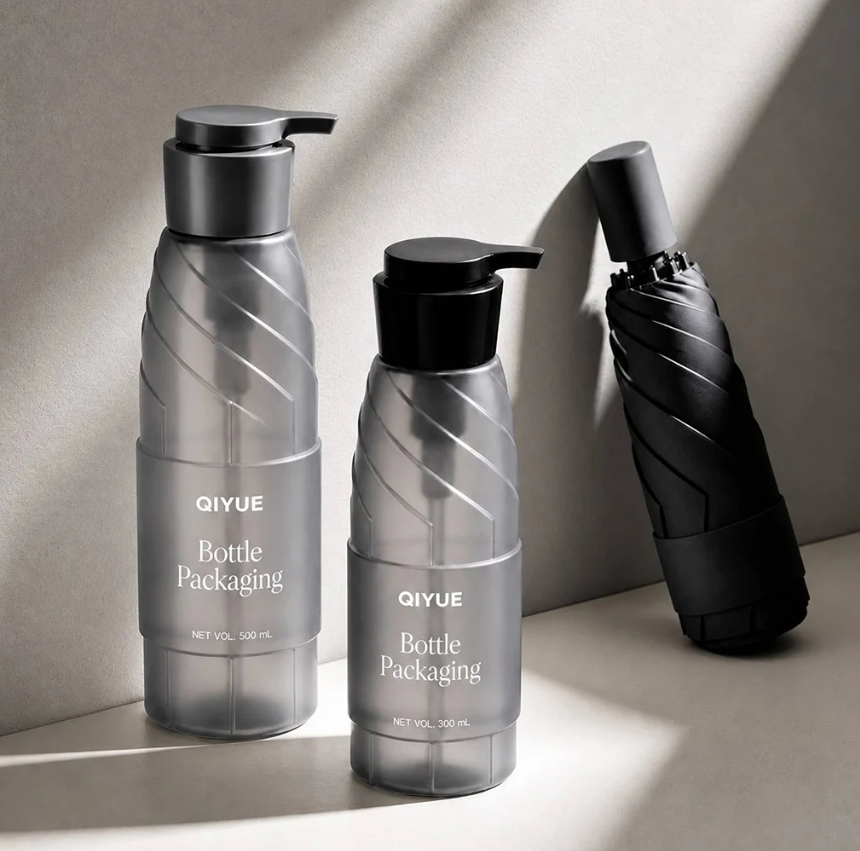
The reality is that a cosmetic launch rarely needs just bottles. It needs bottles, caps, cartons, and labels that all work together and arrive on schedule. Coordinating four separate suppliers is a recipe for mismatched timelines and color drift between components. An integrated partner handles the whole set under one quality system. Qiyue Industrial has been providing high end packaging solutions for the cosmetics industry for over a decade, with a modern standard factory and an integrated business system covering R and D, design, production, and sales. That structure means plastic bottles, cartons, and labels move through the same quality controls and the same schedule. For a startup trying to launch without a packaging fire drill, that kind of integration is the difference between a smooth first run and a costly lesson.
Table of Contents
- Why the First Supplier Choice Shapes Everything That Follows
- The Qualification Questions That Reveal Real Capability
- Reading a Factory Beyond the Brochure
- The Numbers That Matter in Bottle Specifications
- Compatibility, Migration, and the Compliance Side
- Lead Times, Minimums, and the Reality of Scaling
- Where an Integrated Packaging Partner Changes the Equation