 EN

Off-the-Shelf Bottles Only Get a Brand So Far
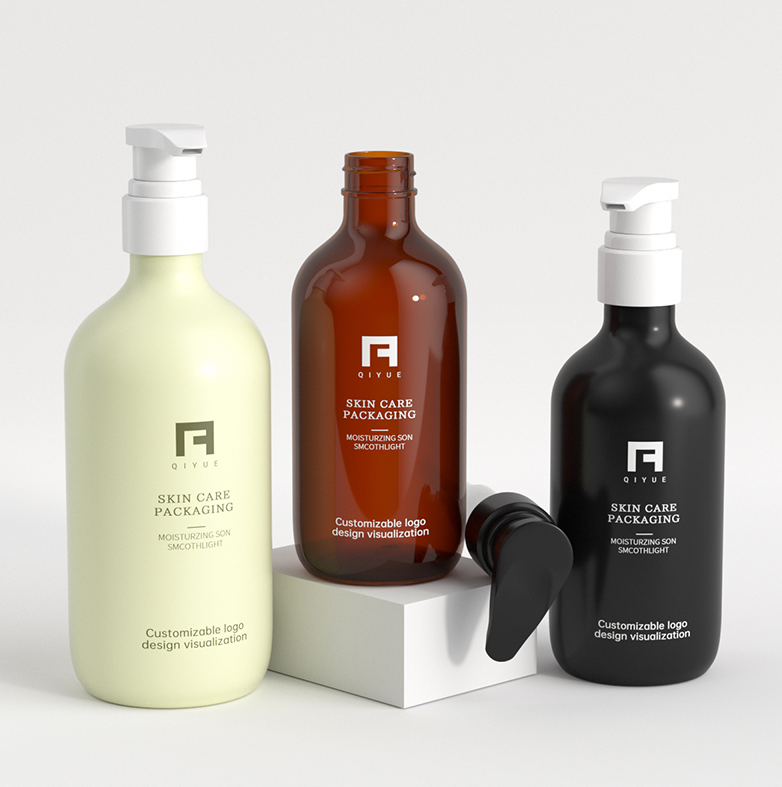
A custom plastic bottles manufacturer solves problems that stock packaging cannot. Stock bottles are fast, cheap, and easy to buy. They also force a formula, label, and closure into someone else's dimensions. A skincare brand that wants a distinctive silhouette, a specific barrier, or a pump that doses accurately will hit a wall with catalog parts. Custom tooling lets the bottle serve the product and the brand, not the other way around.
The tradeoff is commitment. Custom work needs tooling, sampling, and testing. It also needs volume to make sense. A brand with a short seasonal run may be better off with stock. A brand building a signature product line usually is not.
The Hidden Costs of Forcing a Stock Bottle to Fit
Stock bottles often look cheaper on the quote. The real cost shows up later. Labels wrinkle on curved panels. Pumps leak because the neck finish is not matched to the gasket. Shrink sleeves hide a generic shape but add heat and cost. Filling lines run slower because the base is not stable. Freight costs rise when the bottle cannot nest or pack tightly.
A custom bottle can remove those compromises, but only when the design is tested against the filling line and shipping route. A bottle that looks perfect in a sample room can fail in a warehouse.
| Decision factor | Stock bottle | Custom bottle |
|---|---|---|
| Differentiation | Low | High |
| Tooling investment | None | Usually required |
| Unit cost at low volume | Lower | Higher |
| Unit cost at high volume | Similar or higher | Often lower |
| Lead time for first run | Days to weeks | Weeks to months |
| Line fit and closure match | Limited | Engineered |
| Sustainability options | Limited to catalog | PCR, mono-material, refill designs |
The table is directional. A high volume stock bottle can beat a poorly designed custom one. The point is to compare total cost, not piece price.
Tooling, MOQ, and the Math That Decides the Project
Custom molds are not free. A simple blow mold may cost a few thousand dollars. A complex injection mold with unscrewing cores can cost far more. MOQ depends on machine size, mold cavities, and material. A brand should ask three questions before approving tooling:
-
What annual volume justifies the mold?
-
What is the cost per unit at 50%, 100%, and 150% of the forecast?
-
What happens if the design changes after the first run?
A supplier that cannot answer those questions with real numbers is guessing. The best custom plastic bottles manufacturer will show a break even curve, not just a quote. At low volumes, the mold cost can dominate. At high volumes, the unit cost can fall below stock because the bottle uses less resin and packs better.
Designing for Filling Lines and Shipping, Not Just Shelf Appeal
Shelf appeal matters. So does a bottle that survives a 1.2 meter drop and a 40 kg stack. In a project with a personal care brand in southern China, a stock 150 mL bottle was leaking at the neck after filling. The pump fit felt tight, but torque tests showed variation. The brand switched to a custom mold with a tighter neck finish and a small reinforcing rib under the shoulder. The first trial passed ISTA 3A transit testing and ran on the filling line without jams. The cost per bottle rose slightly, but returns and downtime dropped. The launch stayed on schedule.
That case is not unusual. Most packaging failures start at interfaces: neck to closure, label to resin, bottle to case. Custom design controls those interfaces.
Material and Decoration Choices That Scale With Volume
Material choice affects barrier, feel, and end of life. PET gives clarity and recyclability. PETG is tougher but harder to recycle. Polypropylene handles many chemicals but looks cloudy. Post consumer resin lowers carbon impact, yet it can shift color and processability. The EU's Packaging and Packaging Waste Regulation is pushing recycled content targets, so brands should plan for PCR early. A supplier that understands those limits can propose a realistic path instead of promising a perfect drop in replacement.
Decoration adds another layer. Hot stamping, spray coating, and labels all interact with the resin. Testing decoration after filling is essential because formula solvents can migrate through the wall. A tape test and a humidity chamber test catch many problems before mass production. Recycled content also affects decoration adhesion, so early trials matter.
Choosing a Partner That Acts Like an Extension of the Brand
A custom bottle is only as good as the partner behind it. Look for in house mold development, process control, and documented testing. Ask for dimensional reports, resin traceability, and corrective action logs. Communication matters too. A supplier that says "no problem" to every request may be hiding risk. A supplier that names tradeoffs is more useful. Factory audits should verify how molds are stored and how resin lots are handled.
For brands weighing options, Qiyue has spent over a decade building cosmetics packaging with in house mold development, injection and blow molding, decoration, and supply chain coordination. That range helps catch bottle issues before they reach a filling line. The right partner is not the one with the lowest quote. It is the one that makes the launch predictable.
Table of Contents
- Off-the-Shelf Bottles Only Get a Brand So Far
- The Hidden Costs of Forcing a Stock Bottle to Fit
- Tooling, MOQ, and the Math That Decides the Project
- Designing for Filling Lines and Shipping, Not Just Shelf Appeal
- Material and Decoration Choices That Scale With Volume
- Choosing a Partner That Acts Like an Extension of the Brand