 EN
EN

The Material Advantage and Why PET Dominates Packaging
Walk down any aisle of a supermarket, a pharmacy, or a beauty retailer, and the shelves tell a clear story. Polyethylene terephthalate, the polymer the packaging industry simply calls PET, holds more shampoo, more bottled water, more household cleaner, and more cosmetic serum than any other plastic material. The reasons are not accidental. PET offers a combination of properties that no other single packaging material matches at its cost. Its clarity is glass-like, allowing the product inside to be the visual focus and the brand's color palette to show true. Its impact resistance means bottles survive drops during filling, shipping, shelf stocking, and consumer use without shattering into dangerous shards. Its weight is a fraction of glass, reducing shipping costs and the carbon footprint of distribution. Its barrier properties, while not absolute, are sufficient for a vast range of products when properly specified with appropriate additives or multi-layer constructions. And its recyclability, with established collection and reprocessing streams in most developed markets, aligns with the circular economy commitments that brands and consumers increasingly demand. A quality PET bottle manufacturer understands these material properties not as abstract data sheet values but as performance characteristics that must be preserved and optimized through every stage of the manufacturing process. The preform design, the blow molding parameters, the handling and packaging of the finished bottles all affect whether the bottle that reaches the brand's filling line delivers the clarity, strength, and consistency that PET is capable of providing.
Manufacturing Precision and the Consistency That Keeps Filling Lines Running
A PET bottle that looks perfect on a conference table sample stand and a PET bottle that runs without jamming through a high-speed filling line are two different things. The difference is manufacturing precision. The bottle's journey begins not with the bottle itself but with the injection-molded preform, a test-tube-shaped piece of PET resin that contains the finished neck finish in its final form and the bulk of the material that will become the bottle body. The precision of this preform, the consistency of its weight, the uniformity of its wall thickness, the exact geometry of its neck threads, determines everything that follows. A preform with uneven wall thickness will blow into a bottle with thin spots and thick spots, creating weak points that fail under internal pressure or stacking loads. A preform with a neck finish that varies by even a fraction of a millimeter from the specification will not seal reliably with the intended closure. The stretch blow molding process that transforms the preform into a bottle is equally demanding. The preform is heated to a precise temperature profile, stretched longitudinally with a mechanical rod, and expanded radially with high-pressure air against the mold cavity walls. The temperature control, the stretch timing, the blow pressure, and the mold temperature all influence the final bottle's material distribution, sidewall strength, and residual stress. A manufacturer that controls these variables with calibrated equipment, documented process parameters, and in-line inspection systems produces bottles that are identical to each other, batch after batch. A filling line manager who knows that every bottle will cap correctly, stand upright on the conveyor, and survive the filling and labeling process without collapsing or jamming sleeps better at night.
Customization Capability and the Path to a Distinctive Bottle Identity
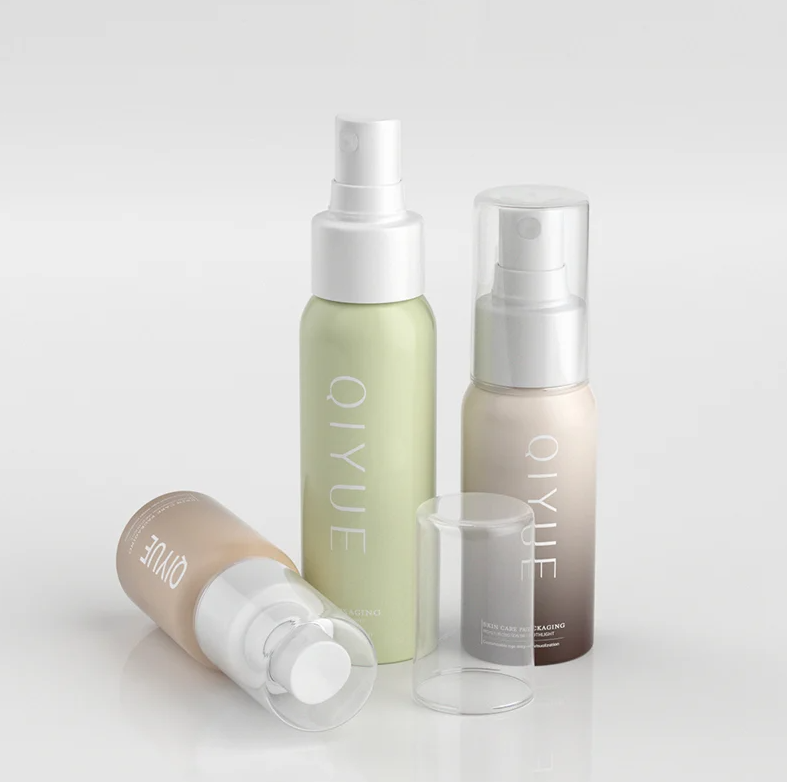
A stock bottle from a catalog serves a purpose, but it does not build a brand. A distinctive bottle shape, a signature color, a custom neck finish that pairs with a unique closure, these are the packaging elements that consumers recognize on shelf and associate with a specific product experience. A quality PET bottle manufacturer offers more than a catalog. The manufacturer offers the design and engineering capability to create a bottle that is unique to a brand, from the initial concept sketch through the mold fabrication and sampling stages. The customization options extend across multiple dimensions. The bottle shape can be round, square, oval, or contoured with ergonomic grip features. The color can be crystal clear, tinted with transparent hues, or fully opaque in any shade the brand requires, achieved through masterbatch addition at the preform molding stage. The neck finish can be specified from a wide range of industry standards or developed as a custom design to fit a proprietary closure or dispensing pump. The bottle weight can be adjusted to achieve the desired hand-feel, from ultra-lightweight for cost optimization to substantial and heavy for a premium tactile impression. Decoration compatibility is another customization consideration. A quality manufacturer produces bottles with surfaces that accept screen printing, hot stamping, shrink sleeves, and pressure-sensitive labels with excellent adhesion and visual clarity. The manufacturer's engineering team advises on the design details that affect both aesthetics and manufacturability, such as draft angles for mold release, wall thickness transitions to avoid stress concentrations, and base geometry for standing stability.
Supply Chain Reliability and the Value of Predictable Delivery
A beautifully designed and perfectly manufactured bottle delivers no value if it arrives late, in insufficient quantity, or damaged beyond use. Supply chain reliability is as important to the choice of a PET bottle manufacturer as the technical quality of the bottles themselves. A brand that launches a new product, commits to a promotional campaign, or enters a new retail channel has production schedules that depend on packaging being on hand when the filling line is scheduled to run. A manufacturer that misses delivery dates, delivers short quantities, or packs bottles in a way that allows excessive transit damage creates costs and disruptions that cascade through the brand's entire operation. A reliable manufacturer operates with adequate production capacity to handle a brand's volume without sacrificing quality or lead time. The manufacturer maintains buffer stocks of standard resins and components to absorb supply chain disruptions upstream. The packaging of the finished bottles, the pallet configuration, the interlayer padding, the stretch wrap tension, is engineered to ensure that bottles arrive at the filling facility in the same condition they left the factory. The logistics coordination, whether shipping domestically or internationally, is managed with documentation accuracy and carrier communication that keeps the brand informed of shipment status. These operational competencies are not visible in a bottle sample, but they determine whether the brand's production schedule holds or slips.
Regulatory Compliance, Food Safety, and Material Traceability
A PET bottle that holds a beverage, a pharmaceutical syrup, a cosmetic toner, or a nutritional supplement is a food-contact material, or a drug-contact material, and it carries regulatory obligations that the brand owner ultimately bears. A responsible PET bottle manufacturer supports its customers by ensuring that its bottles meet the applicable regulatory standards for the intended use and the target market. This support takes concrete forms. The manufacturer uses resin grades that are approved for food contact or pharmaceutical use, with documentation that traces each batch of bottles back to the specific resin lot. The manufacturing facility operates under a quality management system that includes good manufacturing practices appropriate to the products being packaged. The manufacturer can provide certificates of analysis, certificates of conformance, and material safety documentation that the brand owner needs for its own regulatory submissions and retailer requirements. For products exported to multiple regions, the manufacturer understands the differing requirements of the U.S. Food and Drug Administration, the European Union's framework regulation on food contact materials, and other national standards. This regulatory competence is not a marketing claim. It is a body of documentation, testing, and process control that protects the brand owner from the liability and business disruption that a packaging compliance failure would cause.
The Partnership That Grows with Your Brand
A PET bottle manufacturer is not a transactional supplier of a commodity component. For a brand that intends to grow, to expand its product line, to enter new markets, and to build long-term consumer loyalty, the bottle manufacturer is a strategic partner. The relationship begins with a first order, but its value accumulates over time. A manufacturer that has produced a brand's bottles for years understands the brand's aesthetic preferences, its quality standards, and its operational rhythms. When the brand is ready to develop a new product, the manufacturer can move faster because the foundation of mutual understanding is already in place. When the brand needs to scale production to meet unexpected demand, the manufacturer that knows the brand's specifications and has capacity allocated can respond more quickly than a new supplier starting from scratch. Jonyet operates with this partnership approach, bringing together PET bottle manufacturing expertise, customization capability, quality management systems, and supply chain reliability to support brands in the personal care, cosmetic, pharmaceutical, and household product sectors. For the brand owner, this integrated manufacturing and service capability means that packaging, often the most operationally complex component of a product launch, becomes a managed variable rather than a recurring source of uncertainty. The bottles arrive on time, they match the approved sample, they run cleanly on the filling line, and they present the brand's product to the consumer exactly as intended. That consistency, delivered order after order, is the quiet foundation upon which a growing brand builds its reputation.
Table of Contents
- The Material Advantage and Why PET Dominates Packaging
- Manufacturing Precision and the Consistency That Keeps Filling Lines Running
- Customization Capability and the Path to a Distinctive Bottle Identity
- Supply Chain Reliability and the Value of Predictable Delivery
- Regulatory Compliance, Food Safety, and Material Traceability
- The Partnership That Grows with Your Brand