 EN
EN

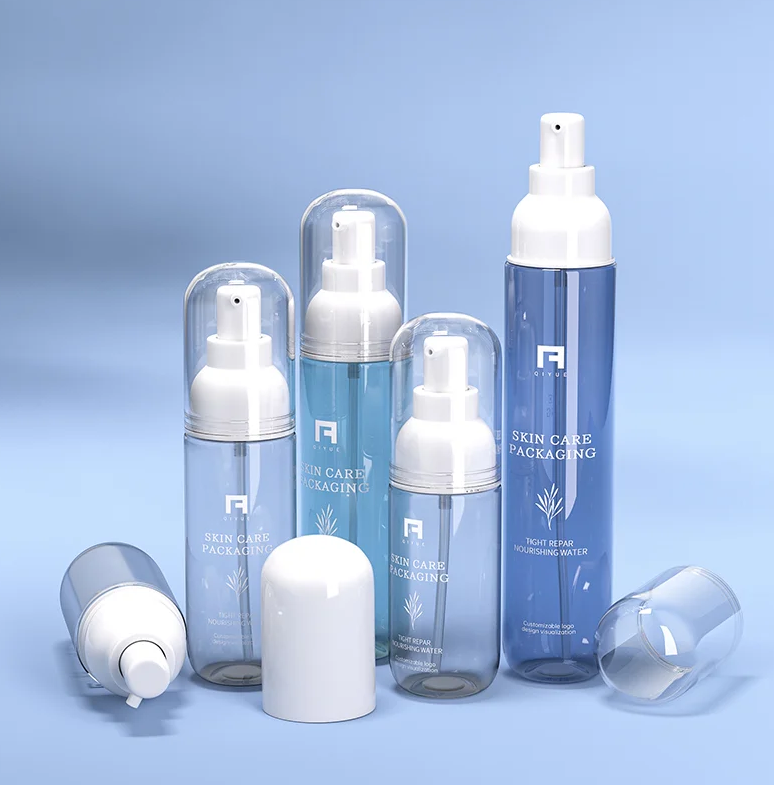
Rethinking What It Means to Maximize a Bottle
The phrase maximizing usage tends to conjure images of consumers refilling a bottle multiple times or finding creative secondary uses for it around the home. Those are valid interpretations, but they represent only the final fraction of a bottle's lifecycle. For a brand owner, a product developer, or an operations director, maximizing a PET bottle begins long before the consumer ever touches it. It begins with the decisions made at the design stage, continues through the manufacturing and filling processes, and extends to the bottle's environmental footprint and its contribution to a circular material economy. Every gram of PET resin that can be eliminated without compromising the bottle's function is material cost saved, transportation weight reduced, and carbon emission avoided. Every millimeter of neck finish precision that eliminates a filling line jam is production uptime preserved and labor cost avoided. Every week of additional product shelf life achieved through an enhanced barrier strategy is market reach expanded and product waste reduced. Maximizing a PET bottle means extracting full value from every stage of its existence, from the resin pellet to the recycling bin. This broader perspective transforms the bottle from a simple container into a strategic variable that affects product quality, operational efficiency, brand perception, and sustainability performance. The strategies that follow are not theoretical ideals. They are practical engineering and design approaches that brands are applying to make their PET packaging work harder across every dimension of its lifecycle.
Lightweighting and the Engineering of Material Efficiency
The most direct path to maximizing a PET bottle is to use less material to achieve the same functional performance. Lightweighting is the engineering discipline of reducing bottle weight through optimized preform design, refined blow molding parameters, and advanced mold geometry. A bottle that weighs several grams less than its predecessor may not feel different in the consumer's hand, but multiplied across a production run of hundreds of thousands or millions of units, those grams translate into significant reductions in resin consumption, material cost, and the transportation energy required to move both empty bottles and filled product. The challenge of lightweighting is that removing material from a bottle also removes structural strength. Top load resistance, the ability of the bottle to withstand the vertical force applied during capping, stacking, and palletizing, decreases as wall thickness decreases. Panel resistance, the bottle's ability to resist deformation when squeezed or when internal vacuum develops during cooling of a hot-filled product, is similarly affected. Successful lightweighting is not about simply reducing wall thickness uniformly across the entire bottle. It is about redistributing material so that it is concentrated where structural demands are highest and minimized where they are lowest. This requires sophisticated computer modeling of the blow molding process and the bottle's mechanical behavior, combined with iterative mold trials to validate that the optimized design performs under real filling and distribution conditions. A manufacturer with this engineering capability can help a brand achieve a lightweight bottle that looks, feels, and performs identically to its heavier predecessor, at a lower cost and with a smaller environmental footprint.
Designing for Filling Line Speed and Damage Reduction
A PET bottle that looks perfect on a designer's screen and feels substantial in a sample evaluation still has to survive the filling line. The speed and reliability with which bottles move through filling, capping, labeling, and packaging operations is a direct function of their design. A bottle with a base that is slightly convex or uneven will wobble on the conveyor, causing misalignment at the filling nozzle, splashing, and product waste. A bottle with a neck finish that varies beyond the tolerance of the capping head will produce inconsistent torque, leading to caps that are either too loose to seal or too tight for the consumer to open. A bottle with sharp transitions in its sidewall profile may catch on guide rails, causing jams that stop the entire line while an operator clears the blockage. Designing for filling line performance means incorporating features that are often invisible to the consumer but essential to the operations team. A stable base with a well-defined standing ring. A neck finish dimensionally consistent within the tight tolerances that high-speed capping equipment demands. A sidewall profile with gentle transitions that allow bottles to flow smoothly through conveyors, labelers, and packers. These design considerations, applied at the mold design stage, increase the percentage of bottles that make it through the line without incident, reduce product loss, and allow the line to operate at its designed speed. A brand that collaborates with its bottle manufacturer on these filling line optimization details discovers that the cost of a well-designed bottle extends well beyond its unit price.
Barrier Strategies and Extending Shelf Life for Sensitive Products
PET is an excellent packaging material for many products, but its natural barrier properties are not sufficient for every formulation. Oxygen ingress through the bottle wall can degrade vitamins in a nutritional supplement, oxidize the fragrance in a premium shampoo, or stale the flavor of a craft beverage. Carbon dioxide egress can cause a carbonated drink to go flat before its intended sell-by date. Moisture loss through the bottle wall can concentrate a liquid product over time, altering its performance or its dosing accuracy. For products that are sensitive to these effects, an advanced barrier strategy expands the range of what a PET bottle can do. The technologies available include plasma-deposited interior coatings that create a glass-like barrier on the inside of the bottle, multi-layer constructions that sandwich a barrier material between layers of PET, and oxygen scavenger additives incorporated into the bottle wall that actively absorb oxygen before it reaches the product. Each of these technologies has its own cost profile, compatibility considerations with recycling streams, and suitability for different product types. The selection of the right barrier strategy depends on the specific sensitivity of the product, the required shelf life extension, the target market's recycling infrastructure, and the brand's sustainability commitments. A manufacturer that offers multiple barrier technologies and can advise objectively on their respective trade-offs provides the brand with options that a single-technology supplier cannot match.
Incorporating Post-Consumer Recycled Content and Closing the Loop
Maximizing a PET bottle's lifecycle value includes maximizing what happens to it after the consumer empties it. A bottle that is collected, processed, and remanufactured into new bottles contributes to a circular economy in which the same material cycles through use after use rather than being downgraded into lower-value applications or landfilled. Incorporating post-consumer recycled PET, commonly called rPET, into new bottle production is the strategy that closes this loop. The technical considerations are real. rPET resin behaves differently during injection molding and blow molding than virgin resin. It may have a slightly different intrinsic viscosity, a different thermal history, and different levels of residual contaminants depending on the quality of the recycling stream from which it was sourced. These differences require adjustments to preform design, processing temperatures, and blow molding parameters to produce bottles that meet the same quality standards as virgin PET bottles. The brand considerations are equally important. Many consumers and retailers now actively seek products packaged in recycled content, and an increasing number of jurisdictions are mandating minimum recycled content percentages in plastic packaging. A brand that proactively incorporates rPET into its bottles positions itself ahead of regulatory requirements, builds credibility with sustainability-conscious consumers, and contributes to the development of the recycling infrastructure on which the circular economy depends.
The Manufacturing Partner as an Optimization Resource
The advanced strategies for maximizing PET bottle usage, lightweighting, filling line optimization, barrier enhancement, and recycled content integration, are not tactics that a brand implements alone. They require a manufacturing partner with the engineering depth, the equipment capability, and the collaborative approach to translate a brand's objectives into a production-ready bottle. The right manufacturer brings mold design expertise that optimizes material distribution for strength at minimum weight. The manufacturer brings filling line knowledge that helps avoid the design features that cause jams, spills, and downtime. The manufacturer brings barrier technology options and the experience to recommend the right one for a specific product and market. The manufacturer brings rPET processing capability and the quality systems to ensure that bottles made with recycled content perform as reliably as those made from virgin resin. Jonyet operates as this type of manufacturing partner, providing PET bottle production that supports brands in maximizing the value of their packaging across every dimension of performance, cost, and sustainability. For the brand owner, this partnership transforms packaging from a procurement transaction into a strategic development function. The bottle that emerges from this collaboration is not simply a container ordered from a catalog. It is an engineered solution that has been optimized for the product it holds, the line that fills it, the shelf that displays it, and the recycling system that recovers it. That comprehensive optimization is what it truly means to maximize a PET bottle.
Table of Contents
- Rethinking What It Means to Maximize a Bottle
- Lightweighting and the Engineering of Material Efficiency
- Designing for Filling Line Speed and Damage Reduction
- Barrier Strategies and Extending Shelf Life for Sensitive Products
- Incorporating Post-Consumer Recycled Content and Closing the Loop
- The Manufacturing Partner as an Optimization Resource