 EN
EN

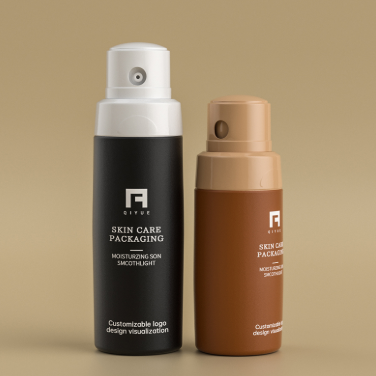
The Material Behind Most Bathroom Shelves
Walk through any personal care aisle and the evidence is hard to miss. Shampoo, body wash, lotion, toner, even some toothpaste tubes all share a common thread, and that thread is the hdpe bottle. High density polyethylene has quietly become the default choice for products that touch skin, hair, and sensitive areas, yet few consumers ever stop to ask why.
The answer goes far beyond cost. HDPE offers a combination of chemical stability, moisture resistance, impact toughness, and recyclability that few other packaging polymers can match in everyday use. For brands that ship across humid climates or store inventory in unconditioned warehouses, that reliability matters.
A materials engineer once described HDPE as the "workhorse polymer" of the packaging world, and the label fits. It is not the flashiest resin on the market, but it performs consistently where failure would be messy and expensive.
Chemical Inertness Means Fewer Surprises
Personal care formulations are surprisingly aggressive environments. A typical shampoo might contain surfactants, preservatives, fragrance compounds, citric acid for pH adjustment, and chelating agents. Some serums include alpha hydroxy acids, vitamin C derivatives, or low concentrations of salicylic acid. These ingredients can interact with packaging in ways that compromise either the product or the container.
HDPE resists this kind of interaction better than many alternatives. Its polymer chains are tightly packed and nonpolar, which reduces the likelihood of chemical absorption or leaching. That property is not theoretical. Stability testing across the cosmetics industry routinely shows that HDPE maintains structural integrity and shows negligible extractables when exposed to common personal care ingredients at room temperature.
There are limitations, of course. Strong oxidizing agents, certain essential oils at high concentrations, and some solvent based formulas can still pose challenges. But for the vast majority of water based and emulsion type products, HDPE is a remarkably safe starting point.
How the Resin Handles Moisture and Humidity
One of the most underappreciated threats to personal care packaging is moisture migration. Products stored in a bathroom are exposed to steam, splashes, and fluctuating humidity on a daily basis. Packaging that breathes too much can let water vapor escape, altering product viscosity over time. Packaging that absorbs moisture can swell, warp, or degrade.
HDPE has an extremely low water vapor transmission rate compared to many other plastics. That barrier property helps keep a toner from thickening or a body wash from separating in humid conditions. A logistics manager handling exports to Southeast Asia once noted that switching from a lower density material to HDPE reduced moisture related complaints by a measurable margin over two rainy seasons.
To be clear, HDPE is not an absolute barrier like glass or aluminum. Products with extreme water activity requirements may still need additional layers or alternative materials. But in the balance between cost, weight, durability, and moisture protection, HDPE sits in a very practical sweet spot.
Impact Resistance and the Reality of Shipping
A plastic bottle that survives on a shelf is one thing. A bottle that survives a distribution center conveyor, a drop from a bathroom ledge, and a squeeze test by an impatient shopper is another.
HDPE has a natural flexibility that allows it to deform slightly under stress and return to shape, rather than cracking. This behavior comes from its semicrystalline structure, which combines ordered regions for strength and amorphous regions for ductility. In practical terms, that means fewer cracked caps, fewer split seams, and fewer leaking bottles during transit.
A packaging audit at a contract manufacturer in southern China found that switching to HDPE bodies reduced transit damage claims by roughly one third over a twelve month period, while holding the same wall thickness. That kind of outcome does not come from luck. It comes from choosing a resin whose mechanical profile matches the abuse profile of real logistics networks.
Material Comparison for Personal Care Packaging
| Property | HDPE | PET | PP | Glass |
| Chemical resistance | High | Moderate | High | Very high |
| Moisture barrier | Good | Very good | Good | Excellent |
| Impact resistance | Excellent | Good | Good | Poor |
| Recyclability | Widely accepted | Widely accepted | Accepted | Accepted |
| Weight | Light | Light | Light | Heavy |
Recyclability and the Safety Perception Gap
Safety is not only about chemical compatibility. It is also about what happens to the package after use. HDPE carries resin identification code 2 and is accepted by the vast majority of municipal recycling programs in North America and Europe. It can be reprocessed into new bottles, pipes, outdoor furniture, and a range of durable goods.
That recyclability supports a cleaner end of life story, which matters for personal care brands trying to meet sustainability targets. Some formulators and marketing teams worry that post consumer recycled HDPE will not perform as well as virgin resin. In many applications, blends of up to 30 percent recycled content maintain acceptable performance without compromising safety.
The honest caveat is that recycled HDPE may have slight color variations or minor odor characteristics depending on the source stream. Those issues are manageable through careful supplier selection and testing, but they do require attention.
Making the Right Call for a Product Line
Choosing HDPE for personal care packaging is not a one size fits all decision, but it is one of the strongest default options available. The material balances chemical stability, moisture protection, impact toughness, and recycling compatibility in a way that directly addresses the risks most brands face in real distribution and use conditions.
Qiyue Industrial, known for its integrated approach to cosmetics packaging, brings more than a decade of experience to material selection and production quality. Its R&D and engineering teams work with brand clients to match resin grades, wall thickness, and finishing methods to the specific demands of each formula, helping ensure that safety claims are backed by practical manufacturing discipline rather than marketing language alone.